
Tutoring Franchise in Canada: The Complete 2026 Guide
What Canadian buyers need to know about a tutoring franchise: EQAO math results, provincial franchise disclosure laws from Ontario to BC, the buying process and Success Tutoring's 2026 launch.

By Michael Black
Founder & Global CEO
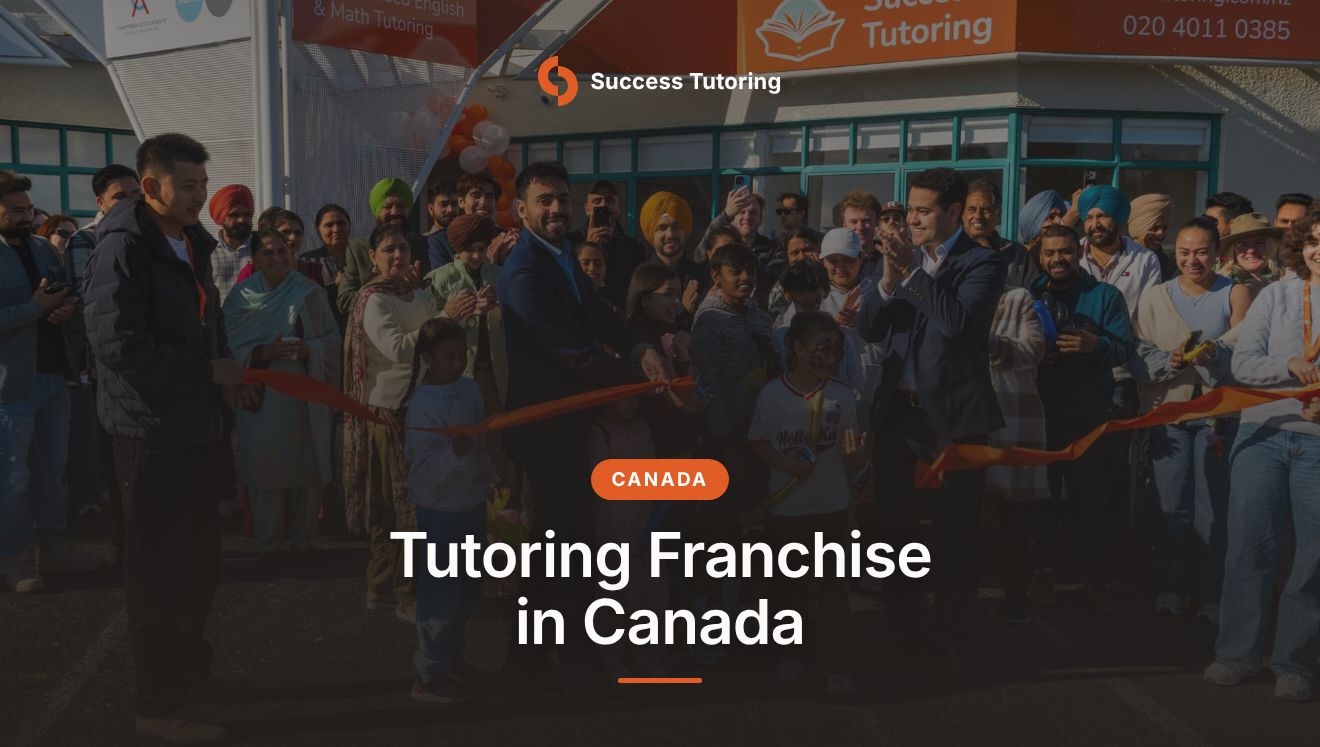
Canada combines a well-regulated franchise sector with a public school system that is, by its own provincial testing, struggling in mathematics. For anyone considering a tutoring franchise in Canada, that combination is the opportunity: parents can see the results data, provincial laws give buyers real disclosure rights, and 2026 brings a new entrant to the market in Success Tutoring.
This guide covers why demand for tutoring is strong, how a centre-based membership franchise earns revenue, what to look for in a brand, how the six provincial franchise disclosure laws protect you, and how Success Tutoring is approaching its Canadian launch.
Why tutoring demand is strong in Canada
Education is a provincial responsibility, so the clearest demand signals are provincial too. Ontario's Education Quality and Accountability Office (EQAO) is the most visible.
- In 2024-25, 51 per cent of Grade 6 students met the provincial standard in mathematics and 58 per cent of Grade 9 students did (EQAO, 2025). Put the other way, half of Ontario's Grade 6 students did not meet the standard.
- In 2025-26, the Grade 6 figure edged up to 52 per cent (EQAO results reported by CP24, September 2026). EQAO itself describes mathematics as "an area of concern" even as results improve slowly.
Those are the numbers Ontario parents see every autumn, and they drive enquiries at tutoring centres across the province. Other provinces publish their own assessments, and the pattern is consistent: mathematics is the subject families worry about most, with literacy second.
Market estimates for Canadian tutoring vary widely because there is no official count. Technavio, a market research firm, projected the Canadian private tutoring market to grow by about USD 5.36 billion between 2025 and 2029 at roughly a 10 per cent compound annual rate (Technavio, 2025). Treat commercial forecasts with caution, but the direction matches what the achievement data suggests.
The franchise sector is well established. The Canadian Franchise Association's economic outlook, prepared with the Canadian Centre for Economic Analysis, reported that franchising contributed more than $143 billion to national GDP in 2025, and projected close to 70,900 establishments and 1.83 million jobs by 2027 (CFA and CANCEA, 2026). Landlords, lenders and lawyers in Canada know how franchising works.
What a tutoring franchise is and how it earns revenue
A tutoring franchise licenses you to operate a learning centre under an established brand using its curriculum, systems, training and marketing. You pay an initial franchise fee and ongoing royalties; you own the centre and employ the staff.
The two main revenue models are:
- Hourly or program-based tutoring, where families pay per session or for a block of sessions. Easy to sell, but revenue swings with attendance, weather and school holidays.
- Membership-based tutoring, where families enrol as members and pay a recurring monthly fee for a set number of sessions per week. Revenue is predictable and the operating focus is retention and results.
Success Tutoring runs the membership model in physical, retail-style centres. According to the company's own news posts, centres have opened with 45, 55, 60 and more than 70 members signed before opening day, the product of structured pre-launch marketing. Opening with a member base rather than an empty schedule is the biggest single difference between a strong first year and a slow one.
Costs are led by rent, tutor wages and marketing. Because members pay monthly and tutors are generally paid per session, the number of students each tutor supports per hour is the key ratio. See the potential earnings page for the model.
What to look for in a tutoring franchise in Canada
- Curriculum fit by province. Ontario, British Columbia, Alberta and Quebec each have their own curriculum. Ask how the program maps to the provincial curriculum where you plan to open and what adaptation has actually been done.
- Launch system. Ask exactly how the franchisor fills a centre before opening. Our approach is on the launch support page.
- Tutor supply. Ask how the brand recruits tutors, how it trains them and whether the training is online. See our tutor training page for how we approach both.
- The disclosure document. In the six regulated provinces you will receive one by law. Read the cost estimates, the litigation history and the list of current and former franchisees, and call the franchisees.
- Territory and site. Ask how territories are defined in Canadian metropolitan areas and what leasing support and fit-out support the franchisor provides.
- Structure. Will you deal with a Canadian master franchisee, a regional developer or head office directly? Success Tutoring has appointed a Canadian CEO and runs a flat model where partners deal with leadership directly.
- Language. If you are considering Quebec, ask how the program and marketing will work in French and how the franchisor handles Quebec's language requirements.
For a comparison with established brands, see our Kumon and Mathnasium comparisons in the Success vs the World series.
Franchise regulation in Canada: provincial disclosure laws
Canada has no federal franchise statute. Six provinces have enacted franchise disclosure legislation: Alberta, British Columbia, Manitoba, New Brunswick, Ontario and Prince Edward Island (Gowling WLG, Doing Business in Canada: Franchise Law). The other provinces and territories, including Quebec, rely on general contract and consumer law.
The six statutes are closely aligned. Ontario's is the Arthur Wishart Act (Franchise Disclosure), 2000, named for the minister who first proposed an inquiry into franchising. British Columbia was the sixth province to legislate; its Franchises Act came into force on 1 February 2017 and is described by law firms as substantially consistent with the other five.
The protections that matter most to a buyer are:
- Disclosure at least 14 days before you commit. The franchisor must give you a disclosure document at least 14 days before you sign the franchise agreement or pay any money. The document must include the franchisor's financial statements, the costs of establishing the franchise, litigation history, and the names and contact details of current and former franchisees. Delivery can be in person, by courier or electronically.
- Rescission rights. If the disclosure document is not provided, or is materially deficient, the Acts give the franchisee a right to rescind the agreement within set periods and to recover amounts paid. The details differ slightly by province; a franchise lawyer will explain the position where you are.
- Fair dealing and the right to associate. The Acts impose a duty of fair dealing on both parties and protect franchisees' right to form associations.
In Quebec, where no disclosure statute exists, the Civil Code's general rules on good faith and contracts apply, and French-language requirements affect signage, marketing and contracts. Seek independent legal advice in the province where you plan to operate, and have an accountant test the cost estimates against your own budget.
The buying process
- Enquiry and discovery call.
- Receipt of the disclosure document. In the six regulated provinces, the 14-day clock starts here.
- Conversations with current and former franchisees listed in the document.
- Legal and financial review.
- Territory and site confirmation, lease and fit-out.
- Signing, payment of the initial fee, training.
- Tutor recruitment and pre-marketing.
- Opening with a member base.
Success Tutoring's version of this sequence is on the process page.
How Success Tutoring approaches Canada: the 2026 launch
Success Tutoring was founded in Sydney, Australia, in 2017 by Michael Black and has been franchising since around 2020. It is a member of the Franchise Council of Australia and the International Franchise Association.
Canada is the company's third international market after New Zealand and the United States. Success Tutoring announced a 2026 Canadian launch with a goal of 120 units by 2029 (Franchise Executives). The Canadian business is headquartered in Vancouver under Gopal Venkata, appointed CEO of Success Tutoring Canada, and franchise territories have been made available in major cities including Vancouver, Toronto, Calgary and Montreal.
What the franchise offers partners:
- A turnkey system, including the "Success Kit".
- Launch and pre-marketing support so members are signed before opening.
- Site selection, leasing and fit-out support for retail-style centres.
- Tutor recruitment and an online franchise training platform.
- K-12 English and Math learning resources and curriculum.
- Ongoing marketing support under a global brand.
- A flat model in which partners deal directly with head office leadership.
Franchise partners do not need to be teachers; many come from corporate, engineering, finance and small-business backgrounds. Fees and earnings are not published in articles. The investment schedule sets out the costs, and in the regulated provinces the disclosure document will contain the detail the law requires. Check available locations for Canadian territories.
Frequently asked questions
Which Canadian provinces have franchise laws?
Alberta, British Columbia, Manitoba, New Brunswick, Ontario and Prince Edward Island have franchise disclosure legislation. Each requires a disclosure document at least 14 days before you sign or pay. The other provinces and territories rely on general contract law.
What is the Arthur Wishart Act?
It is Ontario's franchise disclosure statute, the Arthur Wishart Act (Franchise Disclosure), 2000. It requires pre-sale disclosure, imposes a duty of fair dealing, protects franchisees' right to associate and provides rescission remedies when disclosure is missing or deficient.
How strong is demand for math tutoring in Canada?
In Ontario, EQAO reported that 51 per cent of Grade 6 students met the provincial standard in mathematics in 2024-25 and 52 per cent in 2025-26. Half of Grade 6 students falling short of the standard is the clearest demand signal in the country.
Do I need to be a teacher to own a tutoring franchise in Canada?
No. The franchisor supplies the curriculum, systems and tutor training. You will need to recruit tutors and meet provincial requirements for criminal record and vulnerable sector checks for staff working with children.
When is Success Tutoring launching in Canada?
The company announced a 2026 launch with a goal of 120 units by 2029, headquartered in Vancouver, with territories available in cities including Vancouver, Toronto, Calgary and Montreal.
Next steps
A tutoring franchise in Canada offers documented demand, strong provincial disclosure protection in most large markets and, in 2026, the chance to be an early partner in a new national network. Read why us for how Success Tutoring supports franchise partners, then follow the process from enquiry to opening day.
This article is general information, not financial, legal or tax advice. Franchise laws and market figures change; verify them with the regulator and a qualified adviser in your country before investing.

By Michael Black
Related Resources

Tutoring Franchise: The Complete Guide (2026)
Everything you need to know before buying a tutoring franchise in 2026: the global market, business models, costs, profitability drivers, regulation by country, how to choose a brand and the steps to open.

Tutoring Franchise vs Childcare Franchise: An Honest Comparison
Childcare and tutoring both serve families, but the businesses are very different. Compare investment, staffing ratios, hours, regulation, subsidies and risk before you choose.

Tutoring Franchise vs Cleaning Franchise: Which Fits Your Goals?
Cleaning franchises are cheap to start and full of recurring contracts. Tutoring franchises cost more but build an asset. Here is an honest comparison of the two models.