
Tutoring Franchise in the UK: The Complete 2026 Guide
A buyer's guide to a tutoring franchise in the UK: Sutton Trust tuition data, GCSE and 11-plus demand, the BFA Code of Ethics, how franchising is regulated without a statute, and what to look for.

By Michael Black
Founder & Global CEO
Private tuition in Britain used to be something families did quietly. The Sutton Trust's twenty years of polling show it is now mainstream: close to three in ten secondary pupils in England and Wales have had a private tutor, and in London it is almost half. For anyone weighing a tutoring franchise in the UK, that shift is the foundation of the business case.
This guide covers the demand drivers from the 11-plus to GCSEs, how a centre-based membership tuition franchise earns revenue, what to look for in a brand, how franchising is governed in a country with no franchise statute, and how Success Tutoring approaches the UK market.
Why tutoring demand is strong in the UK
The best data on UK tuition comes from the Sutton Trust, which has polled pupils on private tutoring since the mid-2000s. Its Private Tutoring 2026 report, based on 2025 polling of pupils aged 11 to 17 in England and Wales, found:
- 29 per cent of secondary pupils have had private tutoring at some point, up from 18 per cent when the series began twenty years ago and 27 per cent in 2019.
- 45 per cent of pupils in London have had a tutor, compared with 27 per cent in the rest of England and 24 per cent in Wales. Urban areas sit at 33 per cent and rural areas at 19 per cent.
- Year 11 is the most common year for tutoring, which points to GCSE preparation as the main trigger.
- School-based tutoring is shrinking. Separate Sutton Trust polling found 58 per cent of schools had reduced their tutoring offer compared with the previous year.
The exam data explains the Year 11 spike. In 2025, 59.7 per cent of all GCSE English language entries and 58.2 per cent of mathematics entries in England achieved grade 4 or above, the "standard pass" (Ofqual and Tes, August 2025). Pupils who miss a grade 4 in English or maths must resit, which is why demand for those two subjects is so persistent.
At the other end of secondary entry sits the 11-plus. England has 163 grammar schools, concentrated in Kent, London, Lincolnshire and Buckinghamshire. The Department for Education's 2019 analysis found 37,786 first preferences for 25,827 grammar school places, roughly 15 applicants for every 10 places, and a 2024 report covering 91 grammar schools recorded about 80,000 11-plus registrations. Families preparing for a selective test often start tutoring in Year 4 or Year 5, which creates a second, younger demand cohort for an education franchise.
What a tutoring franchise is and how it earns revenue
A tutoring franchise, often called a tuition franchise in the UK, licenses you to run a learning centre under an established brand using its curriculum, systems, training and marketing. You pay an initial fee and ongoing management service fees; you own the business and employ the staff.
The UK tuition market has three main models.
- Agency or in-home tutoring, where the franchisee matches families with self-employed tutors and takes a margin. Low fixed costs, but no centre and limited control over delivery.
- Hourly centre-based tutoring, where families book sessions at a physical centre and pay as they go.
- Membership-based centre tutoring, where families enrol as members and pay a recurring fee for a set number of sessions each week. Revenue is predictable and the operating focus is retention.
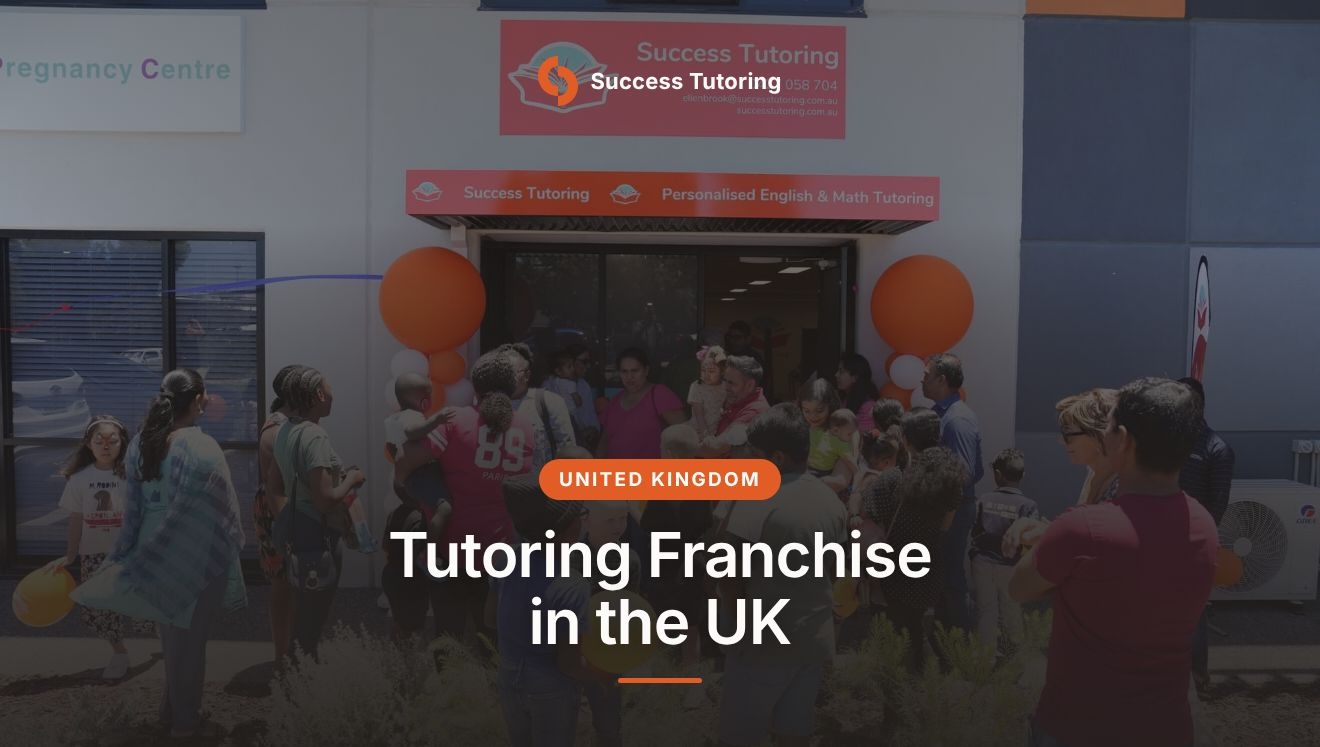
Success Tutoring runs the third model in retail-style learning centres. According to the company's own news posts, centres have opened with 45, 55, 60 and more than 70 members signed before the doors opened, through structured pre-launch marketing. Opening with members rather than an empty timetable changes the first six months entirely.
Costs are led by rent, tutor wages and marketing. Because members pay monthly and tutors are usually paid per session, the ratio of students to tutors per hour is the key operating number. The potential earnings page explains the model in detail.
What to look for in a tutoring franchise in the UK
- Curriculum alignment. Ask how the programme maps to the National Curriculum in England, to GCSE specifications in English and maths, and to 11-plus formats such as GL and CEM-style papers. Ask how Scotland, Wales and Northern Ireland are handled if those territories interest you.
- Launch system. Ask exactly how the franchisor fills a centre before opening, and ask for recent examples. Ours is described on the launch support page.
- Tutor supply and safeguarding. Ask how the brand recruits tutors, how it trains them, and how enhanced DBS checks and safeguarding training are built into the system. See our tutor training page for how we approach both.
- Site and fit-out. High street units and retail parks vary widely in cost. Ask what leasing support and fit-out support you will receive.
- Territory. Ask how territories are defined for UK population density and what is available near you.
- BFA membership. The British Franchise Association accredits franchisors against its Code of Ethics. Membership is voluntary, so ask whether the brand is a member, and if not, what disclosure it provides instead.
- Structure. Will you deal with a UK master franchisee or directly with head office? Success Tutoring runs a flat model in which partners deal directly with leadership.
- Evidence. Speak to existing franchise partners and read franchise stories.
For a comparison with an in-home agency model, see our Tutor Doctor comparison in the Success vs the World series.
Franchise regulation in the UK: no statute, but a code
The United Kingdom has no franchise-specific legislation. There is no mandatory disclosure document, no registration and no statutory cooling-off period. Franchise agreements are governed by general contract law, together with competition law, trade mark law, data protection law and consumer law where relevant.
Self-regulation comes from the British Franchise Association's Code of Ethics, which is based on the European Franchise Federation's code. BFA members must provide prospective franchisees with a copy of the Code and agree to the Association's complaints, disciplinary and appeals procedures. The Code covers matters such as the franchisor's experience, fair dealing, recruitment advertising and the information given to prospects before they sign. The European code was recently revised for the first time in 13 years, and the BFA has been adopting the update into its national code.
The practical consequence is that the burden of due diligence falls on you. Ask every franchisor for:
- The full franchise agreement, in advance, not on signing day.
- Financial accounts of the franchisor company.
- A list of current and former franchisees, and permission to call them.
- Any disclosure document or information memorandum, and the assumptions behind any financial projections.
Have a solicitor with franchise experience review the agreement and an accountant test the numbers. Seek independent legal advice before paying any deposit.
The buying process
- Enquiry and discovery call.
- Receipt of the franchise agreement and disclosure material.
- Conversations with existing franchise partners.
- Legal and financial advice.
- Territory and site confirmation, lease and fit-out.
- Signing, training, tutor recruitment and safeguarding checks.
- Pre-marketing and opening with a member base.
Success Tutoring's sequence is set out on the process page.
How Success Tutoring approaches the UK
Success Tutoring was founded in Sydney, Australia, in 2017 by Michael Black, who started the business at 17 from a spare bedroom in his parents' home (Forbes Australia; Inside Small Business). It has been franchising since around 2020, and has announced the United Kingdom as one of its international markets alongside New Zealand, the United States, Singapore, Canada and India. The company's UK franchise listing describes programmes built on the UK curriculum.
The model UK partners buy into:
- Retail-style learning centres for pupils from the early primary years to sixth form, with a core focus on English and Mathematics.
- A membership model, with launch and pre-marketing support designed to sign members before opening.
- Site selection, leasing and fit-out support.
- Tutor recruitment and online tutor training.
- Learning resources and curriculum, plus ongoing marketing under a global brand.
- A flat structure in which franchise partners deal directly with head office leadership.
Franchise partners do not need to be teachers; many come from corporate, engineering, finance and small-business backgrounds. Success Tutoring is a member of the Franchise Council of Australia and the International Franchise Association. Fees and earnings are not published in articles; see the investment schedule and check available locations for UK territories.
Frequently asked questions
How many UK pupils have private tutoring?
The Sutton Trust's Private Tutoring 2026 report found that 29 per cent of secondary pupils in England and Wales have had private tutoring at some point, rising to 45 per cent in London. The figure was 18 per cent when the series began twenty years ago.
Is franchising regulated in the UK?
Not by a specific statute. Franchise agreements fall under general contract, competition and trade mark law. The British Franchise Association's Code of Ethics is voluntary and binds its members, who must give prospective franchisees a copy of the Code.
Do I need to be a teacher to own a tuition franchise?
No. The franchisor supplies the curriculum, systems and tutor training. You will need enhanced DBS checks and safeguarding procedures for everyone working with children, and you will need to recruit and manage tutors.
Which subjects drive the most demand in the UK?
English and mathematics, because both are compulsory GCSE subjects with a resit requirement for pupils who miss grade 4, and because both are tested in 11-plus and most independent school entrance papers.
How is a membership centre different from an in-home tutoring agency?
An agency matches families with self-employed tutors and takes a margin on each hour. A membership centre enrols families for ongoing weekly sessions at a physical location with a consistent programme, which produces recurring revenue and a visible local brand.
Should I buy a franchise or start my own tuition centre?
A franchise trades a share of revenue for a proven system, brand and support. Starting from scratch gives full control but means building everything yourself. Our franchise resources article on buying versus starting from scratch works through the trade-offs.
Next steps
A tutoring franchise in the UK is supported by two decades of rising demand, hard exam pressure points at 11 and 16, and a franchise sector that, while unregulated by statute, has a clear code of practice. Read why us for how Success Tutoring supports franchise partners, then follow the process from enquiry to opening day.
This article is general information, not financial, legal or tax advice. Franchise laws and market figures change; verify them with the regulator and a qualified adviser in your country before investing.

By Michael Black
Related Resources

Tutoring Franchise: The Complete Guide (2026)
Everything you need to know before buying a tutoring franchise in 2026: the global market, business models, costs, profitability drivers, regulation by country, how to choose a brand and the steps to open.

Tutoring Franchise vs Childcare Franchise: An Honest Comparison
Childcare and tutoring both serve families, but the businesses are very different. Compare investment, staffing ratios, hours, regulation, subsidies and risk before you choose.

Tutoring Franchise vs Cleaning Franchise: Which Fits Your Goals?
Cleaning franchises are cheap to start and full of recurring contracts. Tutoring franchises cost more but build an asset. Here is an honest comparison of the two models.