
Tutoring Franchise: The Complete Guide (2026)
Everything you need to know before buying a tutoring franchise in 2026: the global market, business models, costs, profitability drivers, regulation by country, how to choose a brand and the steps to open.

By Michael Black
Founder & Global CEO
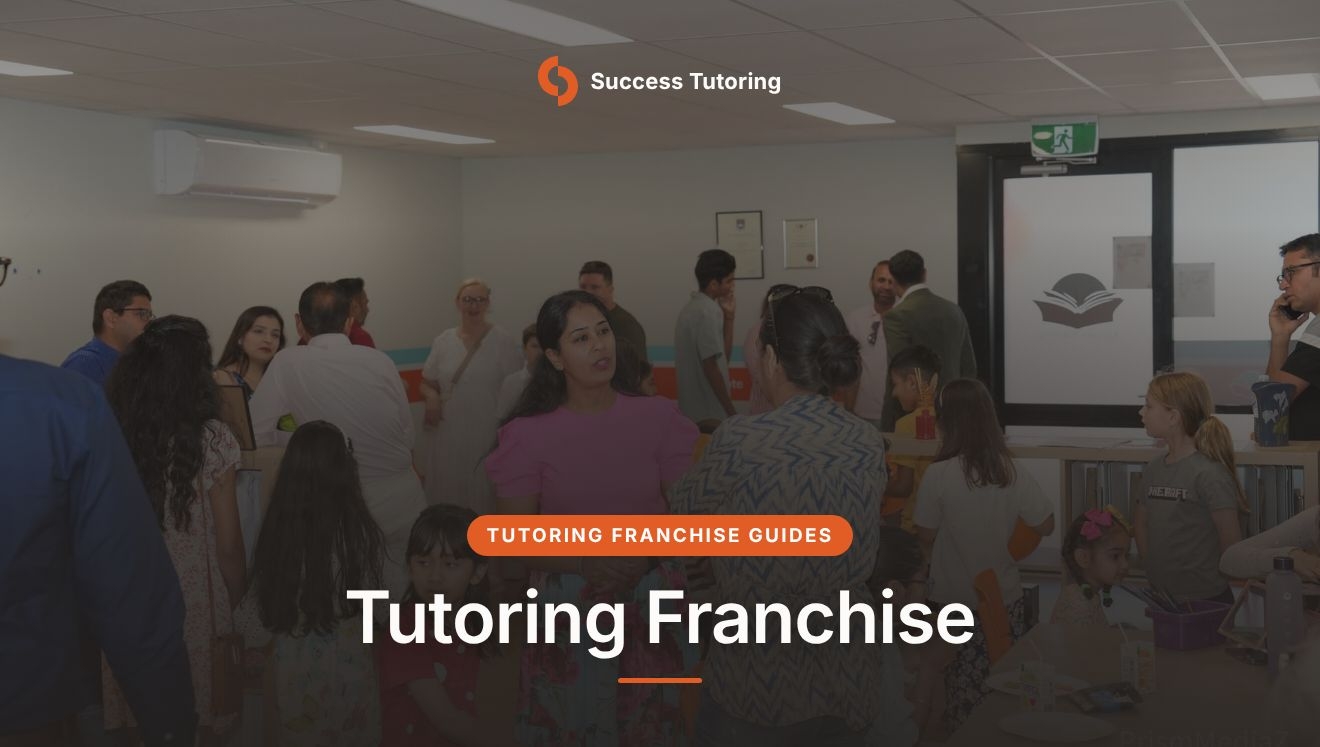
A tutoring franchise lets you own a local education business under an established brand, using a curriculum, systems and marketing that have already been tested in other centres. It is one of the few franchise categories where the customer relationship lasts years rather than minutes, where demand is tied to the school calendar rather than consumer fashion, and where the owner does not need a background in the industry. It is also a category with very different business models hiding under the same name.
This guide is the starting point for anyone researching a tutoring franchise anywhere in the world: what you are buying, the market, the models, costs, profit drivers, regulation and the steps to open. Each section links to a deeper guide.
What is a tutoring franchise?
A tutoring franchise is a licence to run a supplementary education business under a franchisor's brand. The franchisor supplies the brand, the curriculum or learning method, the operating system, training, technology and marketing. The franchise partner (the franchisee) owns and runs the local business, employs the staff, signs the lease where there is a centre, and pays the franchisor an initial fee plus ongoing royalties and usually a marketing levy.
Three things distinguish a tutoring franchise from most other franchises.
- The customer is a family, not a transaction. A parent who enrols a child in Year 3 may stay until Year 10. Lifetime value is high, and so is the cost of a poor experience.
- The product is people. Tutors deliver the service. Recruitment, training and retention of tutors matter as much as any piece of equipment.
- Results are visible. Parents see school reports, test results and their child's confidence. A good centre builds referrals; a weak one loses members quickly.
The owner is usually not the person teaching. Most brands, including Success Tutoring, recruit franchise partners from business, corporate and professional backgrounds and provide the educational system around them. Some brands, such as Kip McGrath, have historically required owners to be qualified teachers, so check each brand's requirements.
How big is the tutoring market?
Tutoring is a large, global and growing market, but estimates of its size vary widely because research firms define "private tutoring" differently. Treat any single figure as an indication rather than a fact.
- Global. Straits Research estimates the global private tutoring market at about US$98.5 billion in 2025, with Asia Pacific accounting for roughly 54.5 per cent. IMARC Group puts the 2024 market at about US$124.5 billion and projects US$238.5 billion by 2033. Most forecasts sit in a range of roughly 7 to 10 per cent annual growth.
- United States. IBISWorld estimates US tutoring and driving schools revenue at about US$18.9 billion in 2025.
- United Kingdom. The Sutton Trust's Private Tutoring 2026 report found that 29 per cent of secondary pupils in England and Wales have had private tutoring at some point, rising to 45 per cent in London.
- Australia. The Australian Tutoring Association has estimated the private tutoring market at more than AUD 1 billion (2022 estimate).
- Singapore. Media analysis of the Department of Statistics' Household Expenditure Survey put total household spending on tuition at about S$1.8 billion in 2023, up from S$1.4 billion in 2018.
- India. IMARC Group estimated the Indian coaching institutes market at US$7.2 billion in 2025.
Franchising itself is also growing. The International Franchise Association's 2026 Franchising Economic Outlook, prepared by FRANdata, projects about 845,000 franchised establishments in the United States in 2026, with output of around US$921 billion and close to 8.9 million jobs.
Why the demand holds up: school systems are competitive, high-stakes exams shape family decisions (NAPLAN and the ATAR in Australia, GCSEs and the 11-plus in the UK, PSLE in Singapore, board exams in India, the SAT and state tests in the US), and many parents work long hours and want structured help they cannot give at home. For the economic case in more depth, read why invest in tutoring.
Tutoring franchise business models compared
"Tutoring franchise" covers at least five different businesses. The model you choose determines your capital outlay, your daily work, your revenue pattern and the asset you eventually sell.
In-centre, membership-based tutoring
Families join as members and pay a recurring monthly fee for a set number of sessions each week, delivered in a physical learning centre, usually in a retail or high-street location. Success Tutoring runs this model for K-12 English and Maths. In the UK, Explore Learning (a company-owned chain, not a franchise) has shown for more than two decades that parents will pay a monthly membership for centre-based maths and English tuition.
- Pros: recurring, predictable revenue; a visible shopfront that generates enquiries; a sellable asset with a lease, members and staff; clear accountability for results.
- Cons: higher set-up cost (lease, fit-out); rent is a fixed cost from day one; the centre must be filled, which makes launch marketing critical.
Self-learning and worksheet-based centres
Students work through a structured, proprietary programme of worksheets or exercises, usually at their own pace, with an instructor supervising. Kumon, Eye Level and JEI are the best-known examples. Royalties are often charged per student per subject.
- Pros: a proven method with strong brand recognition; low initial franchise fees in some systems; simple, repeatable delivery.
- Cons: a narrower product (one method rather than tailored tutoring); per-student royalties rise as the centre grows; less flexibility to adapt to local school curricula.
Full-service and single-subject learning centres
Sylvan and Huntington offer broad K-12 tutoring and test preparation in a centre with assessments and individualised programmes. Mathnasium is a single-subject maths centre.
- Pros: strong national brands in their home market; diagnostic assessment as a sales tool; in Huntington's case, a premium price point.
- Cons: some of the highest investment ranges in the category; percentage royalties; single-subject models cannot serve the whole family.
In-home and online tutoring
The owner manages a roster of tutors who teach in students' homes or online. Tutor Doctor and Club Z! are examples. There is no centre, so start-up costs are lower.
- Pros: low entry cost; no lease risk; flexible geography.
- Cons: no storefront to generate walk-in enquiries; revenue depends heavily on the owner's own sales activity; harder to build a community presence and a saleable asset. Our online vs in-centre tutoring franchise guide compares the two in detail.
Test prep and enrichment (including abacus)
Test prep brands focus on entrance exams and university admissions tests; enrichment brands teach skills outside the core curriculum, such as mental arithmetic using the abacus (UCMAS, ALOHA), coding or STEM.
- Pros: clearly defined products; strong demand in markets with selective entry exams; enrichment programmes can attract younger children.
- Cons: seasonal demand around exam dates for test prep; enrichment is often the first thing families cut when budgets tighten, because it is not tied to school results.
How much does a tutoring franchise cost?
The cost of a tutoring franchise has five components: the initial franchise fee, fit-out and equipment, working capital, ongoing royalties and a marketing levy. Published ranges vary enormously, mostly because of the physical footprint. A few attributed examples from public disclosure summaries and directories show the spread:
- Club Z! (US, in-home). Total initial investment of approximately US$41,000 to US$57,000, per SharpSheets citing the 2026 FDD.
- Kumon (US). An initial franchise fee of approximately US$2,000, with royalties charged per student per subject; total investment ranges in directory summaries run from roughly US$73,000 to more than US$230,000 depending on the FDD year.
- Mathnasium (US). Approximately US$113,000 to US$150,000 total initial investment and a US$49,000 initial fee for a first centre, per Franzy citing FDD Item 7.
- Sylvan Learning (US). Approximately US$108,000 to US$239,000, according to analyses of the 2025 FDD.
- Huntington Learning Center (US). Approximately US$192,000 to US$341,000, per a BizBuySell listing citing the 2025 FDD.
- Kip McGrath (Australia). A 2026 directory listing quoted a total initial investment from about A$210,700, which should be checked against the current disclosure document.
Figures change with every disclosure cycle and differ by country, so request the current document from every brand on your list. Success Tutoring does not publish fees in articles; the investment schedule sets out the current figures and what each line covers.
The headline number is the least useful part of the comparison. A low entry fee paired with a high royalty can cost more over a ten-year term than a higher entry fee with a lower royalty. Model the full term at 50, 100 and 150 students. Our detailed guide to how much a tutoring franchise costs walks through every line.
Is a tutoring franchise profitable? The drivers that matter
Revenue is not profit, and only some franchisors publish financial performance data (in the US, Item 19 of the FDD). What you can understand before you buy is the set of levers that decide whether a tutoring franchise makes money.
- Students per tutor per hour. Tutors are usually paid per session while families pay per month or per session. The ratio of students to tutors in each hour is the biggest single driver of margin.
- Utilisation. After-school and Saturday hours are prime time. A centre that fills its weekday afternoons and weekends is a different business from one that is half empty at 4pm.
- Retention. In a membership model, keeping a family for three years is worth far more than re-selling a ten-week package three times.
- Launch velocity. The months between opening and break-even consume working capital. A franchisor that signs members before you open shortens that ramp; Success Tutoring centres have opened with 45, 55, 60 and more than 70 members signed before the doors opened, according to company news posts.
- Rent as a share of revenue. A great location that costs too much will hurt; a cheap location nobody sees will hurt more.
- Royalty structure. Percentage royalties, per-student fees and flat fees produce very different outcomes as the centre grows.
The potential earnings page explains how we model a membership centre, and our guide is a tutoring franchise profitable? covers how to read financial disclosures and build your own forecast.
How to choose the right tutoring franchise
Before comparing brands, decide what kind of business you want to own: a centre or no centre, broad K-12 tutoring or a single method, a mature brand or a growing one entering your area. Then test every shortlisted brand against the same questions.
- Curriculum fit. Is the programme mapped to your local curriculum and exams, or imported and lightly adapted?
- Launch system. How exactly does the franchisor fill a new centre? Ask for evidence from recent openings.
- Tutor recruitment and training. Who finds tutors, and how are they trained? See our tutor recruitment and tutor training pages for what good looks like.
- Territory. How is it drawn, how many school-age children live in it, and what protection does it carry?
- Support structure. Do you deal with head office, or with a regional master franchisee? Success Tutoring uses a flat model in which partners deal directly with head office leadership.
- Franchisee validation. Call at least five current owners, including some who opened recently.
- Exit. What are the transfer and renewal terms?
Our 12-point checklist for choosing a tutoring franchise and the questions to ask a tutoring franchisor go further. To see how specific brands compare, the Success vs the World comparison hub covers Kumon, Mathnasium, Sylvan, Kip McGrath, Tutor Doctor, Eye Level and many more, and the best tutoring franchises in the world roundup summarises the major brands side by side.
Tutoring franchise regulation by region
Franchise law varies sharply between countries. The summary below is high level, correct at the time of writing (October 2026), and not legal advice. Always have a franchise lawyer in your country review the agreement and any disclosure document.
- United States. The FTC Franchise Rule requires a franchisor to provide its Franchise Disclosure Document (FDD) at least 14 calendar days before you sign or pay. Several states, including New York, Michigan, Oregon and Wisconsin, add their own registration or timing rules.
- Australia. The Franchising Code of Conduct, a mandatory code enforced by the ACCC, requires disclosure at least 14 days before signing and gives a 14-day cooling-off period after signing. A new version of the Code commenced on 1 April 2025.
- Canada. There is no federal franchise statute. Alberta, British Columbia, Manitoba, New Brunswick, Ontario and Prince Edward Island have franchise disclosure legislation requiring a disclosure document at least 14 days before signing or payment.
- United Kingdom. No franchise-specific legislation. The British Franchise Association runs a voluntary accreditation and Code of Ethics.
- New Zealand. No franchise-specific statute; the Fair Trading Act applies, and the Franchise Association of New Zealand (FANZ) runs a voluntary Code of Practice and Ethics.
- Singapore. No franchise statute or registration system. The Franchising and Licensing Association (Singapore) has a Code of Ethics for members, and tuition centres have their own Ministry of Education registration requirements.
- India. No franchise-specific legislation or mandatory disclosure; agreements fall under the Indian Contract Act, and coaching centres are subject to 2024 central guidelines and state rules.
- UAE and Egypt. Neither has a dedicated franchise statute. In the UAE, education regulators such as ADEK in Abu Dhabi license supplementary education providers; in Egypt, technology transfer provisions of the Commercial Law can apply to franchise agreements.
- France. The Loi Doubin (Article L330-3 of the Commercial Code) requires a pre-contractual information document (DIP) at least 20 days before signing or any payment.
- Brazil. The Franchise Law (Law No. 13,966/2019) requires the franchise offering circular (COF) to be delivered at least 10 days before signing or paying any fee.
How to open a tutoring franchise: step by step
- Define your criteria. Budget (including working capital and personal living costs), preferred model, location and the role you want to play day to day.
- Shortlist brands. Use country roundups and comparison posts to narrow the field to three or four.
- Make enquiries and attend discovery meetings. Expect to be interviewed as well as to interview.
- Receive and review disclosure. Read the FDD, disclosure document or information pack in full with a franchise lawyer.
- Validate. Speak to current and former franchisees; visit centres if you can.
- Build a financial model with an accountant, using conservative enrolment assumptions and at least six months of working capital.
- Confirm territory and site. Check demographics, schools, visibility and parking. Ask what leasing support and fit-out support the franchisor provides.
- Arrange finance and sign. Note any cooling-off period that applies in your country.
- Train. Complete owner training and set up your systems. Success Tutoring's franchise training is delivered through an online platform alongside hands-on support.
- Pre-market, recruit and open. Recruit tutors, run launch marketing and sign members before opening day. See launch support.
For more detail, read how to start a tutoring franchise, and if you are weighing a franchise against building your own brand, tutoring franchise vs starting from scratch. Experienced operators may also want our guide to multi-unit tutoring franchise ownership.
Tutoring franchise guides by country
Every market has its own curriculum, exam pressures, franchise rules and competitors. Our country guides go into each in depth.
- Tutoring franchise in Australia: NAPLAN, selective schools, the ATAR and the Franchising Code of Conduct.
- Tutoring franchise in New Zealand: NCEA, the FANZ code and the Fair Trading Act.
- Tutoring franchise in Singapore: PSLE, O and A Levels and MOE registration.
- Tutoring franchise in the USA: the FDD, state laws and Texas.
- Tutoring franchise in Canada: EQAO results and provincial disclosure laws.
- Tutoring franchise in the UK: GCSEs, the 11-plus and the BFA.
- Tutoring franchise in the UAE: KHDA and ADEK licensing.
- Tutoring franchise in India: CBSE, NEP 2020 and coaching rules.
- Tutoring franchise in Egypt: Thanaweya Amma and the Commercial Law.
- Tutoring franchise in France
- Tutoring franchise in Brazil
- Tutoring franchise in Bahrain
- Tutoring franchise in Qatar
- Tutoring franchise in Bangladesh
For brand-by-brand comparisons within a market, see the best tutoring franchises in the USA, UK, Canada and Australia and New Zealand.
How Success Tutoring fits
Success Tutoring is a K-12 tutoring franchise founded in Sydney in 2017 by Michael Black, who started the business at 17 from a spare bedroom in his parents' home in Western Sydney (Forbes Australia; Inside Small Business). It focuses on English and Mathematics, delivered in retail-style learning centres where families join as members.
The company has franchised since around 2020. Franchise Executives reported 35 centres across Australia with a launch schedule for 80 more in 2023, and Inside Small Business has reported territories sold in more than 100 Australian locations; treat these as reported snapshots. Internationally, Success Tutoring has announced New Zealand (its first overseas market, with 25 sites planned over four years), the United States (launching in Texas, with a plan of 80 units across the state in five years), Singapore, Canada (a 2026 launch with a goal of 120 units by 2029), the United Kingdom and India.
What franchise partners receive:
- A turnkey business system, including the "Success Kit".
- Launch and pre-marketing support, so centres sign members before opening.
- Site selection, leasing and fit-out support for retail-style centres.
- Tutor recruitment and training through an online franchise training platform.
- K-12 English and Maths learning resources and curriculum.
- Ongoing marketing support and a national and global brand.
- A flat franchising model with direct access to head office leadership.
Partners do not need to be teachers; many come from corporate, engineering, finance and small-business backgrounds, as our franchise stories show. Success Tutoring is a member of the Franchise Council of Australia and the International Franchise Association, and has hired a former CEO of Kumon as Head of Global Partnerships. Current territories are listed on available locations.
Frequently asked questions
What is the best tutoring franchise to buy?
There is no single best tutoring franchise; there is a best fit for your capital, your market and the business you want to run. Kumon is the largest by centre count, Mathnasium is a leading maths specialist, Tutor Doctor and Club Z! are low-overhead in-home models, and Success Tutoring is a membership-based K-12 centre model. Compare models first, then brands.
How much does it cost to open a tutoring franchise?
Published total investment ranges run from roughly US$41,000 for in-home models to more than US$300,000 for premium centre-based brands in the US, according to disclosure summaries. Centre-based models cost more because of the lease and fit-out. Success Tutoring's figures are on the investment schedule.
Do I need to be a teacher to own a tutoring franchise?
Usually not. Most franchisors, including Success Tutoring, recruit owners for business and leadership skills and provide the curriculum and tutor training. A few brands require teaching qualifications, so check each one.
How long does it take to open a tutoring centre?
It depends mainly on finding and fitting out a site. The sequence is enquiry, disclosure, due diligence, signing, site and lease, fit-out, tutor recruitment and pre-marketing, then opening. Ask every franchisor for its recent opening timelines; Success Tutoring's is outlined on the process page.
Is a tutoring franchise a good investment in a downturn?
Education spending has historically been one of the last areas families cut, because it is tied to children's results and futures. That is not a guarantee; enrichment and discretionary programmes are more exposed than curriculum tutoring. Stress-test your model with lower enrolment assumptions.
What is the difference between a tutoring franchise and an education franchise?
An education franchise is the broad category: early learning, childcare, coding, STEM, languages, enrichment and tutoring. A tutoring franchise is the part focused on academic school subjects. See our guide to the best education franchises.
Is a tutoring franchise better than a food or fitness franchise?
It depends on your goals, but tutoring typically involves no perishable stock, after-school operating hours and recurring family relationships. Compare it directly in our guides to a tutoring franchise vs a food franchise and the best franchises in the world.
Next steps
A tutoring franchise combines steady, school-driven demand with a business you can understand and grow. The decision comes down to model, market and the strength of the franchisor's launch and support system. Start with why us for an overview of how Success Tutoring supports franchise partners, then read what the process looks like from first conversation to opening day.
All third-party trademarks belong to their respective owners. Figures about other franchises are taken from their public websites, disclosure documents or reputable franchise directories at the time of writing and may have changed; verify them directly before making any decision. This article is general information, not financial or legal advice.

By Michael Black
Related Resources

Tutoring Franchise vs Childcare Franchise: An Honest Comparison
Childcare and tutoring both serve families, but the businesses are very different. Compare investment, staffing ratios, hours, regulation, subsidies and risk before you choose.

Tutoring Franchise vs Cleaning Franchise: Which Fits Your Goals?
Cleaning franchises are cheap to start and full of recurring contracts. Tutoring franchises cost more but build an asset. Here is an honest comparison of the two models.

Tutoring Franchise vs Coffee Franchise: Costs, Hours and Margins
Coffee franchises are visible, popular and fiercely competitive. Here is how a tutoring franchise compares on investment, staffing, trading hours, commodity risk and recurring revenue.