Tutoring Franchise in Sri Lanka: The Complete 2026 Guide
A guide to a tutoring franchise in Sri Lanka: tuition class culture, the Grade 5 Scholarship, O/L and A/L exams, the Z-score, franchise and company rules, and what to look for in a brand.

By Michael Black
Founder & Global CEO
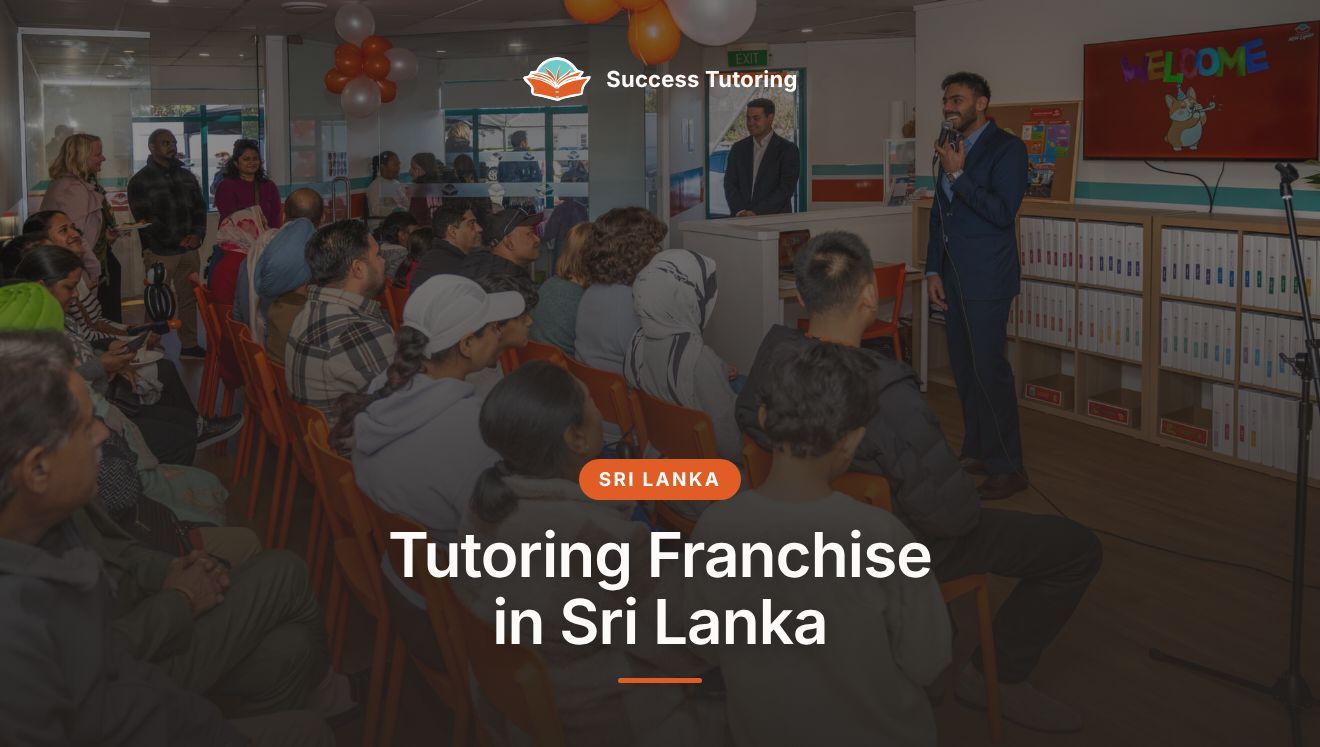
Sri Lanka has offered free education for generations, yet on any weekend in Colombo, Kandy or Galle the roads near the big tuition halls are full of students. Tuition classes, or "tuition" as everyone calls them, are part of growing up in Sri Lanka, from the Grade 5 Scholarship to the A/L. For anyone considering a tutoring franchise in Sri Lanka, that culture is the starting point: families already set aside time and money for classes outside school. The question is whether a structured, branded centre can offer something the familiar tuition class does not.
This guide covers the Sri Lankan school system and its three big examinations, what research says about tuition demand, how a centre-based tutoring franchise earns revenue, how it compares with tuition classes, private tutors and worksheet-based centres, what to look for in a franchisor, the legal and practical points to check, and how Success Tutoring approaches Sri Lanka.
Three exams that shape every childhood: Scholarship, O/L and A/L
Sri Lankan students meet high-stakes examinations earlier than in most countries. All three are conducted by the Department of Examinations.
- The Grade 5 Scholarship Examination. Taken at about ten years old, it awards bursaries and places in sought-after schools. According to results reported by Sri Lankan media including News 1st and the Daily Mirror, 303,670 candidates sat the 2025 examination, and about 17 per cent reached the cut-off marks for the Sinhala and Tamil media. Few exams anywhere put so much pressure on primary-school children and their parents.
- The GCE Ordinary Level (O/L). Taken at the end of Grade 11, the O/L decides whether a student moves on to A/L study and in which stream. Mathematics and the first language are core subjects, and English is taken by almost every candidate.
- The GCE Advanced Level (A/L). Two years after O/L, students sit A/L examinations in streams such as physical science, biological science, commerce, arts and technology. State university places are allocated by the University Grants Commission using A/L results converted into a Z-score, so a few marks can decide whether a student gets a place in a chosen course.
Many families in Colombo and other cities also choose international schools that prepare students for Cambridge or Edexcel qualifications, adding a second, English-medium audience for tutoring.
Why tutoring demand is strong in Sri Lanka
There is no recent official figure for spending on tuition in Sri Lanka, so the evidence comes from surveys and academic research. It points one way.
- Tuition has been widespread for decades. The Central Bank of Sri Lanka's Consumer Finances and Socio-Economic Survey 2003/04, as reported by the Sunday Times, found that 50 per cent of students were taking private tuition, up from 35 per cent in the previous survey, with participation rising from about 40 per cent in the primary grades to about 70 per cent after Grade 11. The figures are old, but they show how deep the habit runs.
- Household spending has grown. Research by Asankha Pallegedara using the Department of Census and Statistics' Household Income and Expenditure Surveys found that household demand for private tuition increased between the 1995/96 and 2006/07 survey rounds, despite free schooling.
- The stakes keep rising. Competition for state university places through the Z-score, and the value of good English for private higher education, work and study abroad, keep families investing in classes.
The tuition class itself takes many forms: a small group in a teacher's home, a weekend class at an institute, or a hall of hundreds listening to a celebrated A/L teacher. Much of it is exam-focused and teacher-led, which leaves room for a centre that builds English and Maths foundations steadily from the primary years.
What a tutoring franchise is and how it earns revenue
A tutoring franchise licenses you to run a learning business under an established brand, using its curriculum, systems, training and marketing. You pay an initial fee and ongoing fees to the franchisor; you own the business, lease the premises and employ the staff.
Two business models are common:
- Per-class tuition, the typical Sri Lankan model: students pay per subject, often monthly, to attend a teacher's class.
- Membership tutoring, where families pay a recurring fee for a set number of weekly sessions at a centre. Revenue is more predictable, and the focus is on retention and visible progress.
Success Tutoring runs the membership model in physical, retail-style centres for K–12 students, with a core focus on English and Mathematics. The main costs of a centre are rent, tutor salaries and marketing.
Franchise, tuition class, private tutor or worksheet centre?
- Running your own tuition class or institute. Low cost to start, but the business depends on the reputation of individual teachers. Popular teachers can move or start their own classes, taking students with them.
- Home tutors. Personal and flexible, but limited to one tutor's hours and hard for parents to monitor.
- Worksheet-based centres such as Kumon. Kumon's method is self-learning: students work independently through graded worksheets and progress level by level. It builds routine and practice, and suits families who value that discipline. Our Success Tutoring vs Kumon guide compares the approaches.
- A tutor-led tutoring franchise. A documented system of curriculum, tutor training, launch marketing and brand. The relationship with families belongs to the centre, so quality does not leave when one tutor does.
A franchise centre does not have to replace a family's A/L classes. It works best as a steady weekly programme that starts early, from primary school, so students arrive at the Scholarship, O/L and A/L with stronger foundations.
What to look for in a tutoring franchise in Sri Lanka
- Fit with the national curriculum. Ask how the programme supports students in the national system and in international schools, and how primary-year English and Maths connect to Scholarship and O/L performance.
- Timetabling. Sri Lankan children often juggle school, several tuition classes and activities. Ask how a centre schedules weekday and weekend sessions around them.
- Launch support. Ask what marketing help the franchisor offers in a market driven by word of mouth, and how responsibilities are shared.
- Tutor recruitment and training. Ask how tutors are recruited, trained and checked, and whether training is online.
- Territory clarity. Ask how territories are drawn around schools and towns. Our franchise territories page shows the cities and indicative territories for Sri Lanka.
- Honest disclosure. With no franchise disclosure law, ask for the franchisor's history, its other markets, the full agreement and contact with existing franchise partners.
Regulation and practicalities in Sri Lanka
This is a high-level overview, not legal advice. Take advice from a Sri Lankan lawyer and chartered accountant before signing.
- No franchise-specific statute. Sri Lanka has no franchise law or mandatory disclosure regime. Agreements are governed by general contract law and intellectual property law, so the written agreement matters.
- Company set-up. Most investors trade through a private limited company registered with the Registrar of Companies under the Companies Act No. 7 of 2007, and register with the Inland Revenue Department.
- Trademarks. Trademarks are registered with the National Intellectual Property Office under the Intellectual Property Act No. 36 of 2003. Confirm the brand is protected in Sri Lanka.
- Tuition class rules. Provincial and local authorities have at times set rules for tuition classes, such as limits on class times on certain days. Check current provincial and municipal requirements for your premises.
- Payments abroad. Payments to a foreign franchisor fall under the Foreign Exchange Act No. 12 of 2017, administered through the Central Bank and authorised dealer banks, and tax may need to be withheld.
- Leasing and safety. Make sure the lease permits an education use, and plan for safe access, fire safety and child safeguarding checks for staff.
How Success Tutoring approaches Sri Lanka
Success Tutoring was founded in Sydney, Australia, in 2017 by Michael Black and has been franchising since around 2020. It has announced international markets including New Zealand, the United States, Singapore, Canada, the United Kingdom and India. Sri Lanka is not an announced market: at the time of writing (October 2026), Success Tutoring is looking for franchise partners and a master franchise partner for Sri Lanka, in cities such as Colombo, Kandy, Galle and Kurunegala, and has no centres there.
The model comes from Australia: membership-based, retail-style learning centres for K–12 students. Support for partners may cover site selection, leasing and fit-out, tutor recruitment and online tutor training, learning resources, launch and ongoing marketing, and support from head office; the franchise agreement and disclosure documents describe what is actually provided. Franchise partners do not need to be teachers. Success Tutoring is a member of the Franchise Council of Australia and the International Franchise Association.
Fees are not published in articles; see the investment schedule. Read our complete tutoring franchise guide, and for neighbouring markets our guides to a tutoring franchise in India and Bangladesh.
Frequently asked questions
Is there demand for a tutoring franchise in Sri Lanka?
Yes. Tuition classes are a long-standing part of Sri Lankan schooling: a Central Bank survey in 2003/04 found half of students taking private tuition, and research on household surveys shows demand growing. The Scholarship, O/L and A/L keep the stakes high.
Is Success Tutoring open in Sri Lanka?
No. No centres have been announced. Success Tutoring is seeking franchise partners and a master franchise partner, who would talk through territories, premises and launch plans with head office.
Does Sri Lanka have a franchise law?
No. There is no franchise statute, so agreements rely on contract and intellectual property law. Have a Sri Lankan lawyer review any agreement.
Do I need to be a teacher?
No. Franchisor support typically covers curriculum, systems and tutor training. Partners need to lead a team and build relationships with families.
How much does a tutoring franchise in Sri Lanka cost?
It depends on your city and site; a shopfront in Colombo costs far more than one in a regional town. Franchise costs are on the investment schedule.
Next steps
A tutoring franchise in Sri Lanka meets one of the world's most established tuition cultures, but it must offer families something different from the tuition class they already know. Choose a brand with a clear system for curriculum, tutors and launch. Read why us to see how Success Tutoring supports franchise partners, then follow the process from enquiry to opening day.
All third-party trademarks belong to their respective owners. Figures about other franchises are taken from their public websites, disclosure documents or reputable franchise directories at the time of writing and may have changed; verify them directly before making any decision. This article is general information, not financial or legal advice.

By Michael Black
Related Resources

How to Sell a Franchise: Exit Strategy, Transfers and End of Term
How to sell a franchise, step by step: planning your exit from day one, transfer clauses and franchisor consent, right of first refusal, transfer fees, buyer approval, valuation basics, and renewal versus sale versus closing.

Semi-Absentee Tutoring Franchise: Can You Own One While Working Full Time?
An honest guide to semi-absentee franchises: owner-operator, semi-absentee and absentee models defined, why most tutoring centres need a hands-on owner at launch, when a manager-led model can work, and what to ask any franchisor.

Franchise Validation Calls: 45 Questions to Ask Franchisees Before You Buy
How to run franchise validation calls: who to call, where to find current and former franchisees in a US FDD or Australian disclosure document, 45 questions to ask, red flags and how to weigh what you hear.