United States · Opportunity market
Tutoring Franchise San Francisco
San Francisco and the inner East Bay combine some of the country's most education-focused parents with intense debate about math, admissions and school assignment. Success Tutoring is seeking franchise partners here.
- Estimated territories in larger cities
- 34
Figures are census-based totals for the available and reserved territories on the Success Tutoring territory map. Sold territories are not shown. Estimates for unmapped cities assume about 50,000 residents per territory.
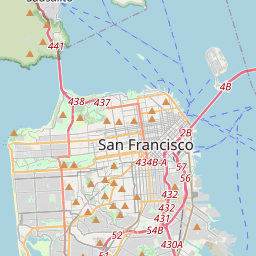
Territory map of San Francisco
Dashed circles mark larger cities and towns where territories have not been mapped yet; their size reflects the estimated number of territories.




Territory data last updated .
San Francisco parents talk about schools the way other cities talk about real estate: constantly, and with strong opinions. Algebra placement, Lowell High School admissions and the school assignment lottery have all been front-page topics in recent years. For a tutoring franchise, that level of engagement is a clear signal of demand. Success Tutoring's US journey started in Dallas, Texas; a San Francisco partner would bring the brand to the Bay Area for the first time.
This page covers San Francisco and the area within about 20 kilometers: the city itself, Daly City and South San Francisco on the Peninsula, and Oakland, Berkeley, Alameda and Richmond across the Bay. For the rest of the state, see our California page.
School systems in San Francisco and the inner East Bay
Schools here follow California's version of the Common Core in English and math. Each spring, children from third to eighth grade, and again in eleventh, sit the state's CAASPP tests, and the scores are posted school by school on the California School Dashboard. At high school, students working toward the University of California or California State University must complete the A–G course requirements.
Local details matter here:
- San Francisco Unified School District (SFUSD) assigns students to schools through a choice-based lottery, so families cannot always count on their nearest school. SFUSD moved Algebra I out of grade 8 in 2014; after years of parent pressure the district has begun bringing it back, and math pathways remain a hot topic.
- Lowell High School, one of SFUSD's best-known high schools, has seen its admissions process change several times, and entry remains highly competitive.
- Oakland Unified, Berkeley Unified, Alameda Unified and West Contra Costa Unified in Richmond each have their own enrollment systems and challenges, while the Jefferson and South San Francisco districts serve Daly City and the northern Peninsula.
San Francisco also has one of the highest rates of private school enrollment of any large US city, including Catholic schools in the Archdiocese of San Francisco and a long list of independent schools with competitive admissions.
Why Bay Area families seek tutoring
When families cannot be sure which public school their child will attend, or whether it will offer an accelerated math pathway, many choose to secure consistency outside school. A weekly program in English and math gives children the same structure wherever they are enrolled.
Competition adds pressure. Entry to Lowell, selective independent schools and highly ranked universities rewards strong grades and writing, and with UC campuses ignoring SAT and ACT results, transcripts matter more than ever. The region's large Chinese, Filipino, Korean, Indian and Latin American communities include many families from education cultures where after-school learning centers are normal. With long work hours and expensive childcare, parents also value a structured, safe place for children after school.
Where families live: opportunity areas
No Bay Area territories have been drawn yet, so early partners help choose where they go, guided by census data on households, children aged 5 to 17 and schools. In a city where many neighborhoods have relatively few children, the best areas tend to be:
- The Sunset, Richmond and Excelsior districts: San Francisco's most family-oriented neighborhoods, with large Asian American communities and busy commercial streets such as Irving, Clement and Mission.
- Daly City and South San Francisco: dense family suburbs just south of the city, with a large Filipino American community.
- Alameda and the Oakland hills: neighborhoods with many young families and strong demand for academic support.
- Berkeley, Albany and El Cerrito: university-adjacent communities where education is a top priority.
- Richmond and Hercules: growing East Bay areas with newer housing and more affordable family homes.
Further south, see San Jose for Silicon Valley.
Running a Success Tutoring center here
In a dense city, head office support can include weighing a storefront on a neighborhood commercial corridor against a suburban shopping center, working through the lease and planning a compact fit-out. Support with tutor recruitment (UC Berkeley, SF State and USF are possible sources) and tutor training is available, along with learning resources, a structured program and launch marketing. The franchise agreement and FDD set out the support.
Partners tend to be organized and community-minded; a teaching credential is not required. Many Bay Area professionals come from tech, finance and engineering, and partners have ongoing support from the Success Tutoring team.
Frequently asked questions
Is California a franchise registration state?
Yes. As in the rest of California, a franchisor must register with the Department of Financial Protection and Innovation (DFPI) under the California Franchise Investment Law before it may sell franchises in San Francisco. The FTC Franchise Rule separately requires a minimum 14-day review period with the Franchise Disclosure Document. Seek independent legal advice.
San Francisco has few children compared with other cities. Is there enough demand?
San Francisco has one of the lowest shares of children of any large US city, which is why territory planning focuses on the family neighborhoods and suburbs where children are concentrated, such as the Sunset, Daly City and Alameda.
How does the SFUSD lottery affect tutoring demand?
Because school assignment is uncertain, families often look for an independent program that stays the same regardless of which school their child attends.
Should I consider the East Bay instead of the city?
It is worth considering. The East Bay offers more family housing and more affordable retail space, and territories there can still draw on the same education-focused culture.
Interested in the Bay Area? Read why we invest in tutoring, see potential earnings, or start with our USA franchise guide.
Cities and towns in San Francisco not yet mapped
These cities and towns of 50,000 or more people have no territories on the map yet. A franchise partner who wants one of them can work with us to draw a new territory.
| City or town | Residents | Estimated territories |
|---|---|---|
| San Francisco | 864,816 | 17 |
| Oakland | 419,267 | 8 |
| Berkeley | 120,972 | 2 |
| Richmond | 109,708 | 2 |
| Daly City | 106,562 | 2 |
| Alameda | 78,630 | 2 |
| South San Francisco | 67,271 | 1 |
Population figures from GeoNames (latest available). Territory estimates assume about 50,000 residents per territory and are indicative only.
Explore nearby
Secure a territory in San Francisco
Talk to our franchise team about the territory you want, the investment and the support available.