United States · Opportunity market
Tutoring Franchise California
California has the largest school system in the United States and some of its most education-focused communities. Success Tutoring is seeking franchise partners to open K–12 English and math centers across the state.
- Estimated territories in larger cities
- 313
Figures are census-based totals for the available and reserved territories on the Success Tutoring territory map. Sold territories are not shown. Estimates for unmapped cities assume about 50,000 residents per territory.
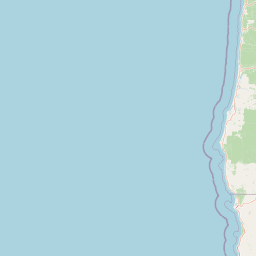
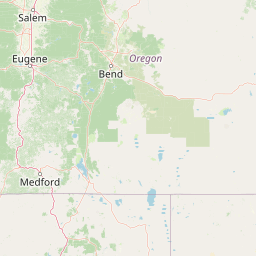
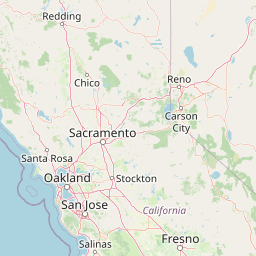
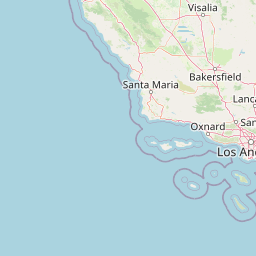
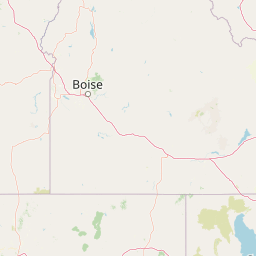
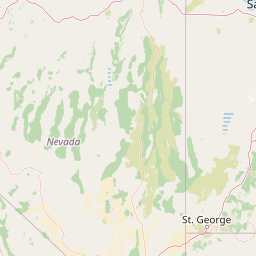
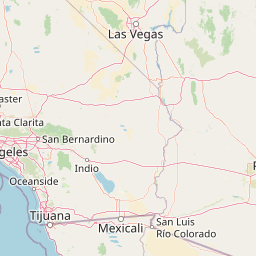
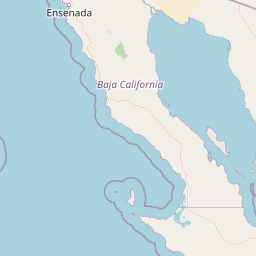
Territory map of California
Dashed circles mark larger cities and towns where territories have not been mapped yet; their size reflects the estimated number of territories.








Territory data last updated .
California educates more public school students than any other state, and parents here are among the most willing in the country to invest in learning outside school hours. For a tutoring franchise, that combination is hard to match. The brand entered the US through Dallas, Texas, and is now building beyond its launch state; a California partner would be one of the first to fly the Success Tutoring flag on the West Coast.
With roughly 39 million residents, per US Census Bureau estimates, California is not one market but several: Southern California, the Bay Area, the Sacramento region, the Central Valley and the Inland Empire each have their own school culture and their own growth suburbs.
The California education system
The California Department of Education (CDE) and the State Board of Education oversee public schooling across more than 1,000 school districts. Classroom teaching follows the California Common Core State Standards in English language arts and mathematics, adopted by the state in 2010. The state's 2023 Mathematics Framework, which guides how those standards are taught, drew national attention and keeps math pathways a live topic for parents.
Testing runs through the California Assessment of Student Performance and Progress (CAASPP). Students take the Smarter Balanced tests in English and math in grades 3 to 8 and grade 11, and results are reported on the California School Dashboard. English learners also take the ELPAC, which matters in a state where a large share of students speak a language other than English at home.
At high school, the stakes rise. To be eligible for the University of California and California State University systems, students must complete the A–G course requirements with qualifying grades. The UC system no longer uses SAT or ACT scores in admissions, which places even more weight on grades, course rigor and math sequence. When a student reaches Algebra I, and whether they can reach calculus by senior year, is a question many families start asking in middle school.
California also has a large charter sector, a significant Catholic school system and a wide range of independent schools.
Why California families invest in tutoring
UC admissions focus on grades in A–G courses, so families want steady improvement across the year rather than a test-prep sprint. Parents in high-performing districts such as Irvine Unified, Cupertino Union, Fremont Unified, San Ramon Valley and Arcadia Unified often look for enrichment and acceleration. In larger systems such as Los Angeles Unified, San Diego Unified and Fresno Unified, many families want support with reading and math foundations.
California's immigrant communities add to demand. Many families, particularly in the Bay Area, the San Gabriel Valley and Orange County, come from education cultures where after-school learning centers are a normal part of childhood. Dual-income households also want a structured, safe place for children to work after school.
Where the opportunity is in California
The California map is still blank, which means early partners help decide where the first territories go. Territories are drawn around catchments of households, school-age children and schools. Areas we expect to look at first include:
- Southern California: Irvine and south Orange County, the San Gabriel Valley, Santa Clarita (including Valencia), Chula Vista and north San Diego County. See our pages on Los Angeles, Orange County and San Diego.
- The Inland Empire: Eastvale, Chino, Ontario Ranch, Rancho Cucamonga, Corona and Menifee, where new master-planned communities attract families priced out of the coast.
- The Bay Area: the Tri-Valley, Fremont, the South Bay and the East Bay. See San Francisco and San Jose.
- Sacramento and the Central Valley: Elk Grove, Roseville, Folsom, Natomas and growth towns such as Tracy and Mountain House. See Sacramento.
Running a Success Tutoring center in California
California partners work from the same operating approach used across the Success Tutoring network, adapted for local conditions. Head office can help you look for a storefront where families already shop, work through the lease (an important step in California's expensive retail market), and plan the build-out of a bright, retail-style learning space. Tutor recruitment and training are supported, along with learning resources and a structured program, and partners can get help planning marketing in the lead-up to opening and beyond. The franchise agreement and the DFPI-registered disclosure document set out the support provided.
Most partners are not teachers. Engineers, finance professionals, corporate managers and small-business owners all run Success Tutoring centers, and the skills that matter most are leadership, local marketing and care for families. Partners receive ongoing support from the Success Tutoring team.
Frequently asked questions
Is California a franchise registration state?
Yes. California is a registration state. Under the California Franchise Investment Law, a franchisor must register its offering with the Department of Financial Protection and Innovation (DFPI) before it can offer or sell a franchise there. Separately, the federal FTC Franchise Rule means you should receive the Franchise Disclosure Document two full weeks, at minimum, before signing anything or handing over money. Seek independent legal advice from a franchise attorney.
How does CAASPP affect demand for tutoring?
CAASPP scores are published on the California School Dashboard and appear on student score reports sent home. Parents use them to spot gaps in reading and math, often in grades 3 to 5, which is when many families start regular tutoring.
Does the end of SAT requirements at UC reduce demand?
It shifts demand rather than removing it. With grades in A–G courses carrying more weight, families look for consistent support in English and math throughout the school year, which is what a weekly membership program is built around.
Which part of California should I consider?
Start with the area you know. Family-heavy suburbs in Orange County, the Inland Empire, the Tri-Valley and the Sacramento region are strong candidates, but territory planning is done with each partner using local data.
Ready to explore the Golden State? Read why we invest in tutoring, hear from current operators in our franchise stories, or open the USA tutoring franchise guide.
Cities and towns in California not yet mapped
These cities and towns of 50,000 or more people have no territories on the map yet. A franchise partner who wants one of them can work with us to draw a new territory.
| City or town | Residents | Estimated territories |
|---|---|---|
| Los Angeles | 3,971,883 | 79 |
| San Diego | 1,394,928 | 28 |
| San Jose | 1,026,908 | 21 |
| San Francisco | 864,816 | 17 |
| Fresno | 520,052 | 10 |
| Sacramento | 490,712 | 10 |
| Long Beach | 474,140 | 9 |
| Oakland | 419,267 | 8 |
| Bakersfield | 373,640 | 7 |
| Anaheim | 350,742 | 7 |
| Santa Ana | 335,400 | 7 |
| Riverside | 322,424 | 6 |
| Stockton | 305,658 | 6 |
| Chula Vista | 265,757 | 5 |
| Irvine | 256,927 | 5 |
| Fremont | 232,206 | 5 |
| San Bernardino | 216,108 | 4 |
| Modesto | 211,266 | 4 |
| Fontana | 207,460 | 4 |
| Oxnard | 207,254 | 4 |
| Moreno Valley | 204,198 | 4 |
| Huntington Beach | 201,899 | 4 |
| Glendale | 201,020 | 4 |
| Santa Clarita | 182,371 | 4 |
| Oceanside | 175,691 | 4 |
| Garden Grove | 175,393 | 4 |
| Rancho Cucamonga | 175,236 | 4 |
| Santa Rosa | 174,972 | 3 |
| Ontario | 171,214 | 3 |
| Elk Grove | 166,913 | 3 |
| Corona | 164,226 | 3 |
| Lancaster | 161,103 | 3 |
| Palmdale | 158,351 | 3 |
| Hayward | 158,289 | 3 |
| Salinas | 157,380 | 3 |
| Pomona | 153,266 | 3 |
| Sunnyvale | 151,754 | 3 |
| Escondido | 151,451 | 3 |
| Torrance | 148,475 | 3 |
| Valencia | 148,456 | 3 |
Population figures from GeoNames (latest available). Territory estimates assume about 50,000 residents per territory and are indicative only.
Explore nearby
- Tutoring Franchise Los Angeles
- Tutoring Franchise Orange County
- Tutoring Franchise Sacramento
- Tutoring Franchise San Diego
- Tutoring Franchise San Francisco
- Tutoring Franchise San Jose
- Tutoring Franchise Alabama
- Tutoring Franchise Alaska
- Tutoring Franchise Arizona
- Tutoring Franchise Arkansas
- Tutoring Franchise Colorado
- Tutoring Franchise Connecticut
- Tutoring Franchise Delaware
- Tutoring Franchise Florida
- Tutoring Franchise Georgia
- Tutoring Franchise Hawaii
- Tutoring Franchise Idaho
- Tutoring Franchise Illinois
Secure a territory in California
Talk to our franchise team about the territory you want, the investment and the support available.