Canada · Opportunity market
Tutoring Franchise Montreal
Greater Montreal is Canada's second-largest metro area, with a strong culture of private schooling and entrance exams. Success Tutoring is seeking franchise partners in Montreal, Laval and the South Shore.
- Estimated territories in larger cities
- 50
Figures are census-based totals for the available and reserved territories on the Success Tutoring territory map. Sold territories are not shown. Estimates for unmapped cities assume about 50,000 residents per territory.
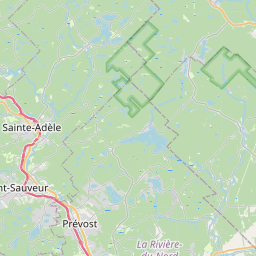
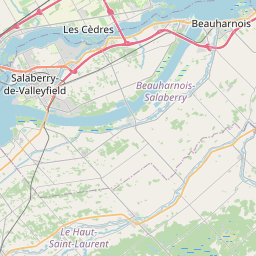
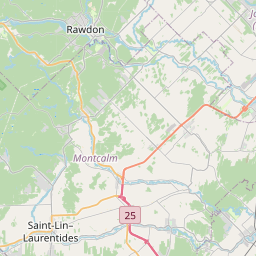
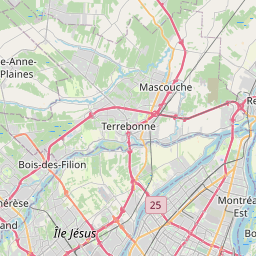
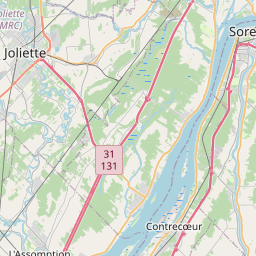
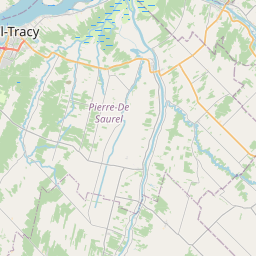
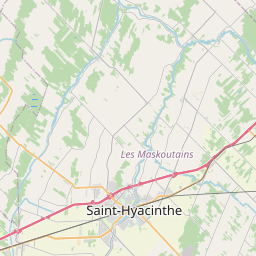
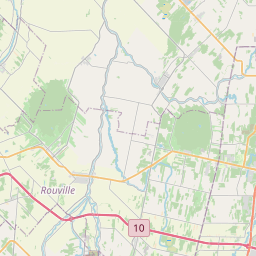
Territory map of Montreal
Dashed circles mark larger cities and towns where territories have not been mapped yet; their size reflects the estimated number of territories.






Territory data last updated .
Greater Montreal is home to more than four million people, according to Statistics Canada, making it Canada's second-largest metropolitan area. It is also the most distinctive education market in the country: a French-language system shaped by Quebec's language laws, an English-language minority sector, one of the highest rates of private school attendance in Canada, and a CEGEP stage between high school and university that no other province has. Anyone considering a tutoring franchise in Montreal needs to understand all of these.
Success Tutoring is launching in Canada in 2026, with a goal of 120 units by 2029. Montreal territories have not yet been drawn. We are looking for franchise partners in the region, and territories are expected to be drawn with each partner using data on households, children and schools.
How schooling works in Quebec
Education in Quebec is the responsibility of the Ministère de l'Éducation du Québec (MEQ). The structure differs from the rest of Canada:
- Elementary school runs six years, followed by five years of secondary school (Secondary I to V).
- Students then attend CEGEP: a two-year pre-university program or a three-year technical program. University admission is based largely on the CEGEP performance score, the cote R.
- French-language public schools are run by centres de services scolaires, which replaced French school boards in 2020. English-language public schools remain under school boards, such as the English Montreal School Board and the Lester B. Pearson School Board.
The Charter of the French Language (Bill 101) requires most children to attend French-language elementary and secondary schools. A child is generally eligible for English public schooling only if a parent received most of their elementary education in English in Canada, confirmed by a certificate of eligibility. As a result, most Montreal children, including the children of newcomers, are educated in French.
Exams and pressure points
- Ministerial exams in Grade 6 (French or English language arts, and mathematics), and in Secondary IV and V, including mathematics, science, history of Quebec and Canada, and language subjects. Secondary IV and V results count towards the courses needed for the Secondary School Diploma (DES).
- Secondary IV math sequence choice, between Cultural, Social and Technical (CST), Technical and Scientific (TS) and Science (SN). The stronger sequences are prerequisites for many CEGEP science programs, so math marks in Secondary III matter.
- Private secondary school entrance exams, written in Grade 6. Quebec's subsidized private schools educate a large share of Montreal's secondary students, and competition for places is intense. Selective public programs, such as international programs, also test applicants.
The Grade 6 entrance exam season is one of the biggest drivers of tutoring in Montreal, alongside Secondary IV math.
Why Montreal families pay for tutoring
Montreal's newcomer families often speak neither French nor English at home. Their children are learning in French at school, and parents want help with math and with English, which many see as essential for their children's futures. Anglophone and bilingual families, meanwhile, often want English literacy support alongside French-language or immersion schooling.
Many francophone families also use tutoring heavily, particularly for private school entrance and Secondary IV and V math. In short, demand spans every language group.
Success Tutoring's membership model, with set weekly sessions in English and math from kindergarten to the end of secondary school, suits families planning for these milestones. Long commutes across the bridges also make a centre close to home especially practical.
Where the opportunities are
- The West Island, including Pointe-Claire, Kirkland, Dollard-des-Ormeaux, Beaconsfield and Pierrefonds, where English-speaking and bilingual families are concentrated.
- Saint-Laurent, Côte-Saint-Luc, Notre-Dame-de-Grâce and Côte-des-Neiges, diverse, family-heavy parts of the island.
- Laval, Quebec's third-largest city, with large newcomer communities and many young families.
- Brossard and Longueuil on the South Shore, connected to downtown by the REM light rail, with large Chinese-Canadian and other newcomer communities in Brossard.
- Terrebonne, Repentigny, Vaudreuil-Dorion and Mirabel, fast-growing suburbs on the North Shore and off-island west.
Running a centre in Montreal
Quebec's language laws apply to businesses as well as schools. Under the Charter of the French Language, as strengthened by Bill 96 in 2022, businesses must be able to serve customers in French, and French must be predominant on signage, marketing and standard contracts. Montreal partners therefore need to run their centre comfortably in French.
Support for partners can include site selection and leasing, fit-out, tutor recruitment and training, learning resources and a structured program, ongoing marketing and launch support; the franchise agreement and disclosure documents describe how that works. You do not need to be a teacher; many partners come from corporate, engineering, finance and small-business backgrounds. McGill, Concordia, Université de Montréal and UQAM give Montreal one of the largest student populations in North America to recruit tutors from.
Frequently asked questions
Does Quebec have a franchise disclosure law?
No. Quebec is not one of the seven provinces with franchise disclosure legislation. Franchise agreements are governed by the Civil Code of Québec, including its rules on good faith and contracts of adhesion, and French-language requirements apply to contracts. Seek independent legal advice from a Quebec lawyer.
Do I need to speak French to own a tutoring franchise in Montreal?
In practice, yes. Quebec law requires businesses to operate and serve customers in French, and most Montreal families are francophone or educated in French.
Who are the main customers for an English and math program in Montreal?
Newcomer families who want their children to learn English, anglophone and bilingual families, and families preparing for Grade 6 entrance exams and Secondary IV math.
Can territories be drawn in Laval or on the South Shore?
Yes. Territories can be drawn with each partner across the Montreal region, including Laval, Longueuil and Brossard.
For more, see the Quebec page, read the guide to a tutoring franchise in Canada, or see how the process works.
Cities and towns in Montreal not yet mapped
These cities and towns of 50,000 or more people have no territories on the map yet. A franchise partner who wants one of them can work with us to draw a new territory.
| City or town | Residents | Estimated territories |
|---|---|---|
| Montréal | 1,600,000 | 32 |
| Laval | 376,845 | 8 |
| Longueuil | 229,330 | 5 |
| Terrebonne | 94,703 | 2 |
| Repentigny | 76,237 | 2 |
| Brossard | 69,575 | 1 |
Population figures from GeoNames (latest available). Territory estimates assume about 50,000 residents per territory and are indicative only.
Explore nearby
Secure a territory in Montreal
Talk to our franchise team about the territory you want, the investment and the support available.