Canada · Opportunity market
Tutoring Franchise Quebec
Success Tutoring is looking for franchise partners in Quebec, from Montréal and Laval to Québec City and Gatineau. Here is how Quebec's school system, ministerial exams and language rules shape a tutoring franchise.
- Estimated territories in larger cities
- 82
Figures are census-based totals for the available and reserved territories on the Success Tutoring territory map. Sold territories are not shown. Estimates for unmapped cities assume about 50,000 residents per territory.
Territory map of Quebec
Dashed circles mark larger cities and towns where territories have not been mapped yet; their size reflects the estimated number of territories.


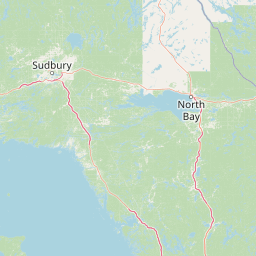
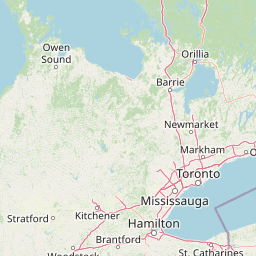


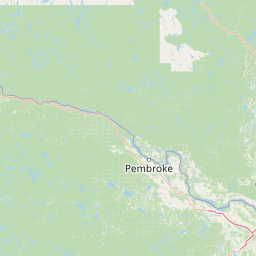
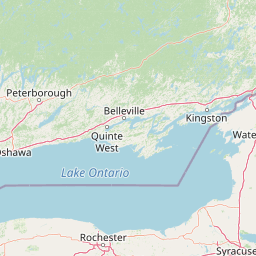


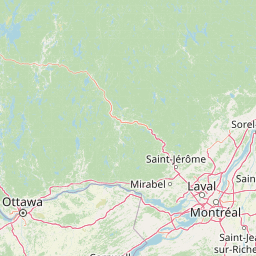


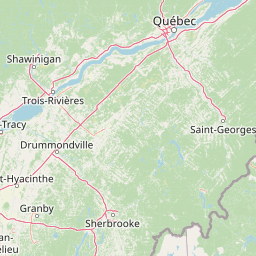




Territory data last updated .
Quebec is Canada's second most populous province, with about nine million people according to Statistics Canada, and its school system is unlike any other in the country. Success Tutoring is launching in Canada in 2026 and is looking for franchise partners in Quebec. No territories have been drawn in the province yet. They are expected to be drawn with partners who understand the market, and for Quebec that means partners who can operate confidently in French.
This page explains how schooling works in Quebec and what a tutoring franchise in Quebec would need to get right.
Quebec's school system
Education in Quebec is overseen by the Ministère de l'Éducation du Québec (MEQ). Its curriculum, the Programme de formation de l'école québécoise, runs through six years of elementary school and five years of secondary school. Secondary 5 is roughly equivalent to Grade 11 elsewhere in Canada. Students then go to CEGEP, a college stage between high school and university that is unique to Quebec.
The MEQ sets ministerial exams at key points, and they carry real weight:
- Elementary 6: exams in French (language of instruction) and mathematics, with an earlier French exam in Elementary 4.
- Secondary 4: exams in mathematics, science and technology, and history, which count towards the Secondary School Diploma (DES).
- Secondary 5: exams in the language of instruction and the second language.
Secondary 4 math is a turning point. Students choose between different mathematics sequences, and the more advanced sequences are prerequisites for many science and health programs at CEGEP. Parents know that a weak Secondary 4 math result can close doors.
Language and school choice
The Charter of the French Language, known as Bill 101, requires most children in Quebec to attend French-language public schools. English-language public schooling is generally available only to children who hold a certificate of eligibility, usually because a parent received most of their elementary education in English in Canada. As a result, most newcomer families, including those who speak English at home, send their children to French schools.
In 2020, the province replaced its French-language school boards with school service centres (centres de services scolaires), while English school boards remained. Quebec also has one of the largest subsidized private school sectors in Canada. In the Montréal area, a significant share of secondary students attend private schools, and many private and selective public programs, such as international and enriched programs, set entrance exams in Grade 6.
Why Quebec families use tutoring
Three things drive demand. First, the Secondary 4 and 5 ministerial exams, and especially Secondary 4 math, which determines CEGEP options. Second, the entrance exams for private and selective public secondary schools, which many families start preparing for in Elementary 5. Third, language: children of immigrant families learning in French, and francophone children aiming to strengthen their English, both want structured support.
Tutoring, or tutorat, has also received public attention. After the pandemic, the Quebec government funded tutoring programs in schools to help students catch up, which made after-school academic support more familiar to many families.
Where the opportunity is in Quebec
The strongest markets are the province's largest urban areas:
- Greater Montréal, including the island of Montréal, Laval, Longueuil, Brossard on the South Shore and Terrebonne and Repentigny on the North Shore.
- Québec City and Lévis, the provincial capital and its fast-growing south-shore neighbour.
- Gatineau, across the river from Ottawa, with many bilingual and federal public service families.
- Sherbrooke, Trois-Rivières, Saguenay, Drummondville and Saint-Jean-sur-Richelieu, regional cities with growing family populations.
What a Quebec partner needs to know
A Quebec centre would need to be built around French. Most students are taught in French, so tutoring in mathematics and in the language of instruction would need to be delivered in French. The Charter of the French Language, strengthened by Bill 96 in 2022, also sets requirements for French in commercial signage, advertising, contracts and the workplace.
Elsewhere, support for partners can include finding and leasing premises, the build, hiring and training tutors, learning resources and a structured program, and launch marketing for a new centre. In Quebec, those materials and that marketing would need to work in French, and the support offered would be set out in the franchise agreement and disclosure documents. A teaching background is not required. In Quebec, Success Tutoring is particularly interested in bilingual partners with business experience who can help shape how the program is adapted for Quebec families.
Frequently asked questions
Does Quebec have a franchise disclosure law?
No. Quebec is not one of the seven provinces with franchise disclosure legislation. Franchise agreements are governed by the Civil Code of Québec, including its general duty of good faith and its rules on contracts of adhesion. Seek independent legal advice from a Quebec lawyer before signing.
Would a Success Tutoring centre in Quebec teach in English?
Most Quebec students attend French-language schools, so a centre would need to deliver its program in French to serve the broad market. English support would also be in demand from francophone families.
Is there a Montréal page?
Yes. See our Montréal page for more on Canada's second-largest city.
Why are there no Quebec territories on the map?
Success Tutoring drew its first Canadian territories in Ontario and British Columbia. In Quebec, territories are expected to be drawn with partners once the approach for French-language delivery is agreed.
For more on how franchising works across the country, read the Canada guide. You can also explore why tutoring is a resilient sector and how we approach launching a new centre.
Cities and towns in Quebec not yet mapped
These cities and towns of 50,000 or more people have no territories on the map yet. A franchise partner who wants one of them can work with us to draw a new territory.
| City or town | Residents | Estimated territories |
|---|---|---|
| Montréal | 1,600,000 | 32 |
| Québec | 528,595 | 11 |
| Laval | 376,845 | 8 |
| Gatineau | 242,124 | 5 |
| Longueuil | 229,330 | 5 |
| Saguenay | 143,692 | 3 |
| Sherbrooke | 129,447 | 3 |
| Lévis | 126,396 | 3 |
| Trois-Rivières | 119,693 | 2 |
| Terrebonne | 94,703 | 2 |
| Repentigny | 76,237 | 2 |
| Saint-Jean-sur-Richelieu | 71,613 | 1 |
| Brossard | 69,575 | 1 |
| Drummondville | 59,489 | 1 |
| Saint-Jérôme | 54,948 | 1 |
| Granby | 53,979 | 1 |
| Saint-Hyacinthe | 50,326 | 1 |
Population figures from GeoNames (latest available). Territory estimates assume about 50,000 residents per territory and are indicative only.
Explore nearby
- Tutoring Franchise Gatineau
- Tutoring Franchise Laval
- Tutoring Franchise Montreal
- Tutoring Franchise Quebec City
- Tutoring Franchise Alberta
- Tutoring Franchise British Columbia
- Tutoring Franchise Manitoba
- Tutoring Franchise New Brunswick
- Tutoring Franchise Newfoundland and Labrador
- Tutoring Franchise Nova Scotia
- Tutoring Franchise Ontario
- Tutoring Franchise Prince Edward Island
- Tutoring Franchise Saskatchewan
Secure a territory in Quebec
Talk to our franchise team about the territory you want, the investment and the support available.