United States · Opportunity market
Tutoring Franchise Washington, D.C.
Success Tutoring is looking for franchise partners in the Washington, D.C. region, from the District itself to Montgomery, Fairfax, Arlington and Prince George's counties. Bring weekly K–12 English and math tutoring to your community.
- Estimated territories in larger cities
- 24
Figures are census-based totals for the available and reserved territories on the Success Tutoring territory map. Sold territories are not shown. Estimates for unmapped cities assume about 50,000 residents per territory.
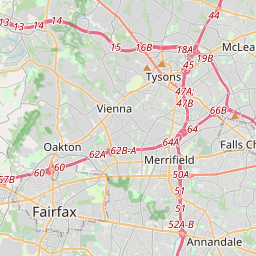
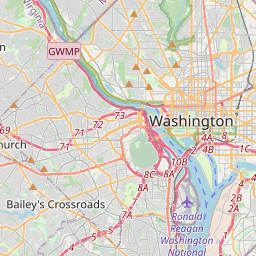
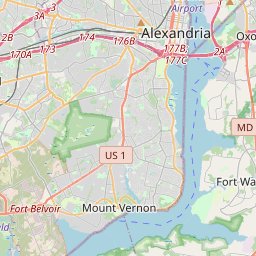
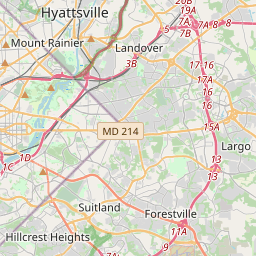
Territory map of Washington, D.C.
Dashed circles mark larger cities and towns where territories have not been mapped yet; their size reflects the estimated number of territories.








Territory data last updated .
Washington, D.C. is one of the most highly educated metro areas in the country, and parents here plan their children's schooling with the same care they bring to their own careers. The region spans three jurisdictions, the District, Maryland and Virginia, each with its own school system, tests and pathways. A tutoring franchise in Washington, D.C. serves families who know exactly what they want for their children and are willing to invest in it.
Success Tutoring launched in the United States in Texas and is expanding. No territories have been mapped in the D.C. region yet, so partners here would help draw them and be among the first in the Mid-Atlantic.
How schooling works in the District
D.C. has no state government, so the Office of the State Superintendent of Education (OSSE) plays the role of a state education agency. Since spring 2025, students in grades 3 to 8 and in high school have taken the DC CAPE (Comprehensive Assessment of Progress in Education) in English language arts and math, which replaced the PARCC tests the District had used for a decade. Science is tested separately.
What makes D.C. unlike almost anywhere else is its two public school sectors of similar size:
- District of Columbia Public Schools (DCPS), run under mayoral control, including neighborhood schools and citywide selective high schools such as School Without Walls, Benjamin Banneker and McKinley Technology.
- Public charter schools, overseen by the DC Public Charter School Board, which enroll close to half of the District's public school students.
Families apply to most out-of-boundary DCPS schools and almost all charters through My School DC, the common lottery. Navigating that lottery, and then making sure a child succeeds once placed, is a defining part of parenting in the District.
The suburbs: Maryland and Virginia
Most of the region's children live outside the District:
- Montgomery County Public Schools and Prince George's County Public Schools in Maryland, where students take the Maryland Comprehensive Assessment Program (MCAP). Montgomery County's magnet and criteria-based programs are highly sought after.
- Fairfax County Public Schools, the largest district in Virginia, along with Arlington, Alexandria City and Loudoun County schools, where students take the Virginia Standards of Learning (SOL) tests. Thomas Jefferson High School for Science and Technology in Fairfax County is one of the most competitive public high schools in the country.
Why D.C.-area families use tutoring
Several things create steady demand:
- Selective pathways. Lottery placements, criteria-based middle school programs, TJ admissions and the District's selective high schools all reward strong grades and skills built over years.
- Mobility. Diplomatic, military and federal families move in and out of the region constantly and often need help adjusting to a new curriculum.
- Long commutes. Two-career households with long commutes value a reliable, structured after-school routine near home.
- International families. The region's embassies, international organizations and immigrant communities create demand for English support alongside math.
Where the opportunity is
With territories still to be drawn, the areas we would look at first include:
- Inside the District: family-heavy neighborhoods in Northwest and Northeast D.C., Capitol Hill and the growing areas around Navy Yard and Brookland.
- Northern Virginia: Arlington, Alexandria, Reston, Herndon, Fairfax and the Loudoun County corridor around Ashburn.
- Montgomery County: Bethesda, Rockville, Silver Spring, Gaithersburg and Clarksburg.
- Prince George's County: Bowie and the communities along the Beltway.
See the Maryland page and the Virginia page for the wider state picture.
What running a center involves
Support for partners in the region can include site selection and leasing, fit-out, tutor recruitment and training, learning resources and a structured program, and launch marketing support, as described in the franchise agreement and FDD. The region's universities, including Georgetown, George Washington, Howard, American, the University of Maryland and George Mason, are possible sources of tutors.
You do not need to be a teacher. You lead the business and the team, while trained tutors teach. Many D.C.-area professionals have management and client-facing experience.
Frequently asked questions
Which franchise registration rules apply in the D.C. region?
It depends on where you live and where the center will be. The District does not require franchise registration, but both Maryland and Virginia do. In every case, the federal FTC Franchise Rule requires that you receive the Franchise Disclosure Document at least 14 days before signing or paying. Seek independent legal advice.
What is DC CAPE and why does it matter to parents?
DC CAPE is the District's state assessment in English and math, introduced in 2025 to replace PARCC. Results are reported by school and shape how families compare DCPS and charter options.
Can one center serve families from both D.C. and the suburbs?
A center serves the families within its territory. Territories are drawn around where families live, using census data, so a center near the District line may serve families from both sides.
Does the charter school lottery affect demand for tutoring?
It can. Families who secure a place at a competitive DCPS or charter school often want extra support there, and families still waiting look for ways to support learning in the meantime.
To learn more, see how the process works, read about why tutoring is a strong sector, or start with the USA tutoring franchise guide.
Cities and towns in Washington, D.C. not yet mapped
These cities and towns of 50,000 or more people have no territories on the map yet. A franchise partner who wants one of them can work with us to draw a new territory.
| City or town | Residents | Estimated territories |
|---|---|---|
| Washington, D.C. | 601,723 | 12 |
| Arlington | 207,627 | 4 |
| Alexandria | 153,511 | 3 |
| Silver Spring | 71,452 | 1 |
| Rockville | 66,980 | 1 |
| Bethesda | 60,858 | 1 |
| Reston | 58,404 | 1 |
| Bowie | 58,025 | 1 |
Population figures from GeoNames (latest available). Territory estimates assume about 50,000 residents per territory and are indicative only.
Explore nearby
- Tutoring Franchise Abilene
- Tutoring Franchise Allen
- Tutoring Franchise Amarillo
- Tutoring Franchise Arlington
- Tutoring Franchise Atlanta
- Tutoring Franchise Austin
- Tutoring Franchise Baltimore
- Tutoring Franchise Beaumont
- Tutoring Franchise Boston
- Tutoring Franchise Brownsville
- Tutoring Franchise Cary
- Tutoring Franchise Cedar Park
Secure a territory in Washington, D.C.
Talk to our franchise team about the territory you want, the investment and the support available.